Most people tolerate B12 injections well with proper guidance
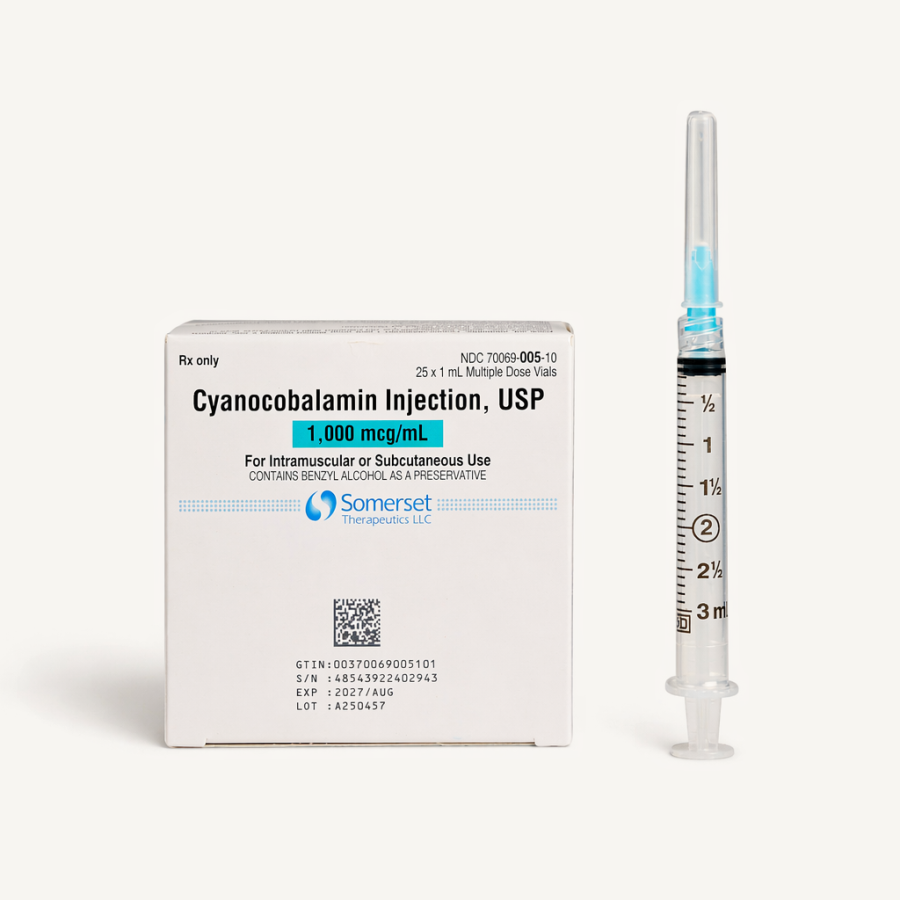
Medical history and medication review to flag any interactions or contraindications before prescribing Goal-specific protocol selection based on injury location, duration, and severity rather than a one-size-fits-all 500 mcg recommendation Written reconstitution and injection instructions with the exact mL and unit markings for the patients specific vial and prescribed dose Injection training for self-administration patients, either in-clinic or via telehealth video walkthrough Week-four check-in to assess response, adjust dose or frequency if needed, and confirm the patient is completing the cycle correctly Pharmacy-grade 503A product with verified purity, sterility, and potency from an FDA-registered compounding pharmacy For patients who have never injected a peptide before, we also review the BPC-157 benefits and mechanism in detail before starting the protocol so the patient understands what the peptide does, what to expect during the cycle, and what results realistically look like at four, eight, and twelve weeks
This is also where the supply-versus-stability point from the reconstitution section bites: if a reconstituted 10 mg vial holds ~66 doses but the solution is only reliably stable for a few weeks, plan the reconstitution volume so you are not left discarding drug you paid for
People taking high-dose B12 supplements (1,000 to 5,000 mcg daily), receiving B12 injections (cyanocobalamin or methylcobalamin), or consuming heavily fortified foods can easily push their serum levels above 900 pg/mL
With six votes for and six votes against recommending that state and local governments require a prescription, committee Chair Martin Kulldorff cast the vote that sank the proposal